THANK YOU FOR SUBSCRIBING

Aerospace and Defense Review Weekly Brief
Be first to read the latest tech news, Industry Leader's Insights, and CIO interviews of medium and large enterprises exclusively from Aerospace and Defense Review
![IHI Corporation [TYO: 7013]: Engineering Propulsion for the Demands of Modern Flight and Space Access](https://www.aerospacedefensereviewapac.com/uploaded_images/Untitled-12-9brq.jpg "IHI Corporation [TYO: 7013]: Engineering Propulsion for the Demands of Modern Flight and Space Access")
IHI Corporation [TYO: 7013]
Engineering Propulsion for the Demands of Modern Flight and Space Access
In aviation, defense and space, propulsion is what keeps missions moving. Engines must perform in extreme conditions without compromise, where reliability can make the difference between success and failure. As organizations push for greater efficiency, lower costs and dependable performance, propulsion has become a strategic capability as much as an engineering one. IHI Corporation has spent decades building that capability. With expertise spanning aircraft engines, defense programs and space launch systems, the company brings together research, design, manufacturing, testing, maintenance and system integration to support some of the world's most demanding missions. Integrating Aerospace Propulsion Expertise across Air and Space IHI's aerospace business involves extensive propulsion activities within commercial aviation, defense programs, MRO operations and space programs. It operates as a prime contractor and supplier of aircraft engines for Japan's Ministry of Defense and actively participates in large international commercial aircraft engine programs in cooperation with major international manufacturers, as well as supporting space programs through the manufacture and supply of rocket propulsion units and components. That expertise extends across multiple areas of aerospace engineering. Engineering insights such as advanced materials, thermal management, turbomachinery design and precision manufacturing, which have been developed for aircraft engine applications, can contribute to space propulsion technology. At the same time, rocket system development can lead to improved engineering capabilities for aircraft applications. Bringing these disciplines together has given IHI a deep understanding of propulsion technologies that operate in some of the most demanding aerospace environments. Whether supporting aircraft expected to perform reliably over thousands of flight hours or launch vehicles carrying out critical missions, the priorities remain reliability, precision and consistency. These propulsion activities are closely connected through shared engineering capabilities. Engineering, manufacturing, testing and maintenance continually feed into one another, creating insights that support both product development and operational performance.
![IHI Corporation [TYO: 7013] Engineering Propulsion for the Demands of Modern Flight and Space Access](https://www.aerospacedefensereviewapac.com/newstransfer/upload/Vsat_Technology_Solution_Apac-8ruke-.jpg "IHI Corporation [TYO: 7013] Engineering Propulsion for the Demands of Modern Flight and Space Access")
Space Tech
SATCOM networks in aviation, government and other mission-critical fields need to be secure, resilient and fully under customer control. Traditionally, however, achieving that autonomy meant contending with centralized hub-based architectures that created security risks, data sovereignty limitations and a single point of failure. PolarSat built its business around a different model. Founded in 2003, the company has focused exclusively on private, full-mesh, hubless VSAT systems that enable organizations to own and operate their routed IP networks. Rather than functioning as tenants on a central gateway, customer sites communicate directly with one another. If the primary control station goes offline, control automatically switches to another site, reducing the risk of disruption. “Our focus has always been making communication networks affordable and operationally sovereign. Not requiring a hub enables true private networking,” explains Cos Modafferi, CEO. PolarSat designs and manufactures its VSAT antennas, modems and terminals at its facility in Montreal, Canada. An installed base of more than 6,000 hub-less full-mesh MF-TDMA modems worldwide, many operating reliably for decades, guides every stage of development, testing and production. Units are assembled and validated first as standalone devices, then within full network configurations, helping the company uphold strict ISO-certified quality standards and proven product maturity.

Top Space Geodetic Parameter Estimation Software System Distributor in APAC 2026
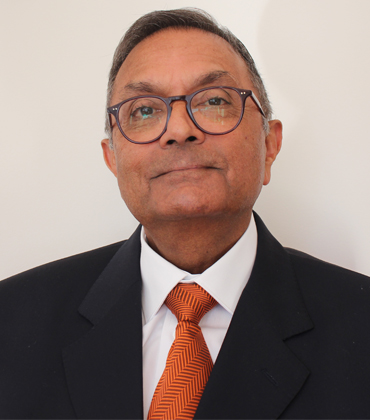
Space geodesy is built on precision and precision is built on agreement. Every satellite orbit, navigation signal and sea level measurement traces back to a shared coordinate system anchored to the center of the Earth. That center moves by millimeters. The reference frame shifts. Any organization that depends on accurate positioning needs geodetic products it can trust. The long standing challenge is fragmentation. The major observation techniques in space geodesy—GNSS, Satellite Laser Ranging and DORIS—produce tracking data that most software processes separately. Integrating them has typically required combining outputs from different tools, introducing inconsistencies that matter at the millimeter scale where the discipline operates. Ramesh Govind, director of the Space Geodesy Analysis Centre (SGAC) and recognized as the Top Space Geodetic Parameter Estimation Software System Distributor 2026, has spent more than three decades developing a platform that resolves this problem. MicroCosm processes all seven major GNSS constellations, Satellite Laser Ranging and DORIS within a single integrated system. Orbit solutions, Earth orientation parameters, station positions and reference frame products all emerge from one consistent mathematical framework. “Space geodesy is a fast growing discipline in terms of applications and global participation,” says Govind. “That keeps me excited about contributing to this science.”
Satellite Tech
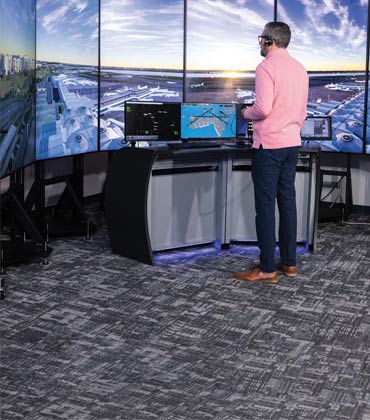
In the air traffic simulation training industry, where precision and reliability define success, technology alone is never enough. What truly sets a company apart is how it listens to and responds to the needs of its customers. Training systems must mirror the intensity of real-world operations, adapt to evolving airspace demands, and provide measurable improvements in safety and efficiency. This is only possible when customer experience is at the center of innovation. As a global leader in air traffic control simulation, Adacel has fully embraced this philosophy. By weaving customer experience into the fabric of its culture, the company has redefined how the industry views training and simulation. It has etched a legacy of excellence since 1987. With its customer-centric culture, Adacel drives every decision within the organization with that singular focus, from product development to employee training. Michael Saunders, Vice President of Strategy, Simulation & Technical Services explains that the company’s ambition goes beyond delivering technology. Its true goal is to be a trusted partner in its clients’ success. “Everything we design, build, and support is anchored in one principle: improving the customer experience,” says Saunders, underscoring this philosophy’s central role in shaping Adacel’s identity and future. This philosophy has permeated the company’s operations, from its leadership down to its engineers, who are tasked with creating solutions that address the real-world challenges air traffic controllers face. Providing Trainees with Realistic Scenarios The impact of this customer-first approach is evident in Adacel’s simulation solutions. The company understands that air traffic control is a highly specialized and regulated field, requiring training environments close to real-world conditions. Adacel offers a wide range of training platforms to meet these demands, from simple, single-position devices to fully immersive, high-fidelity simulations replicating the complexity of air traffic control towers and radar rooms. Adacel’s flagship simulation platform, MaxSim, is the culmination of decades of collaboration with the air traffic control community. It is designed to give trainees realistic scenarios that mirror the pressure, decision-making, and communication demands they will face on the job. Built to replicate the intensity and precision of real-world air traffic management, MaxSim is not just a piece of software. It is a fully scalable ecosystem that adapts to the needs of each customer.
MRO

Introducing Bombardier Defense
Steve Patrick, Vice President, Bombardier Defense [TSE: BBD.B]
eVTOL
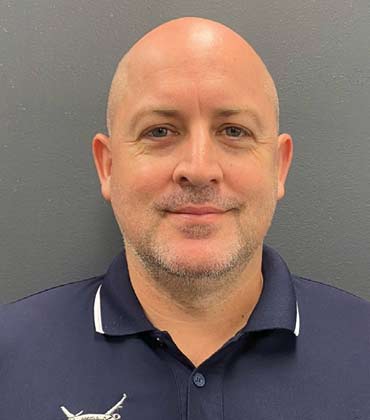
Navigating Aircraft Maintenance Quality Challenges: Insights from a Quality Manager
Ben Osborn, Head of Airworthiness Compliance, Northrop Grumman (NYSE: NOC)
A&D Manufacturing
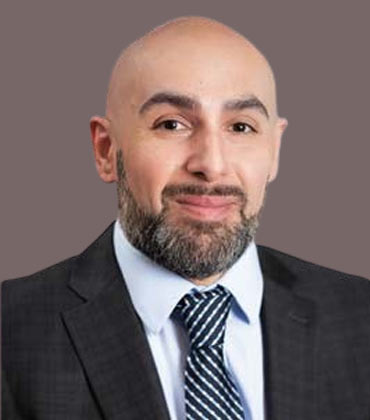
Innovating Defense: Leadership, AI, And Resilience
Dominic Perez, Chief Technology Officer, Curtiss-Wright Corporation [NYSE: CW]
Aerospace and Defense Manufacturing

Strategic AOG Response: Elevating Airline Resilience in an Era of Disruption
Mark Finger, Manager - AOG Response, Delta Air Lines [NYSE: DAL]
Defense Solutions
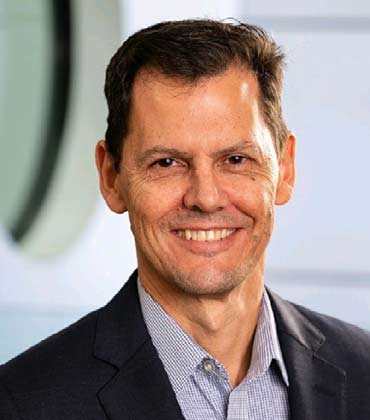
Are You Ready To Embrace Emerging Digital Aviation?
Scott White, Senior Manager Strategy and Business Development, Airbus in Australia Pacific

IN MY OPINION
eVTOL
Redefining Future Operations through Technology Enabled Services
Chris Allan, Director Accounts & Partnerships, NATS

LAST WORD
Aerospace and Defense Consulting
Changing Technologies in the Aviation Sector
David So Man Fung, Senior Vice President Base Maintenance, SIA Engineering Company [SGX: S59]
IN FOCUS
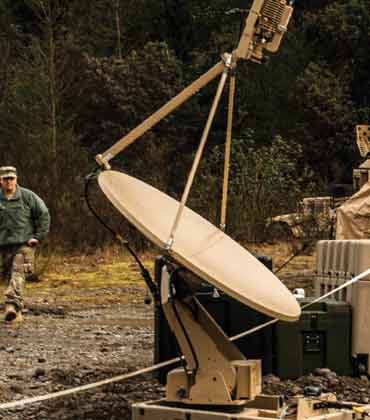
APAC Connectivity Infrastructure: Advanced VSAT Communication Networks
VSAT providers across APAC are strengthening resilient connectivity, remote operations, digital infrastructure, and enterprise communication continuity strategies.

EDITORIAL
Digital Operations Strengthening Aerospace Reliability
The aerospace industry across the Asia Pacific region is entering a period of rapid transformation, driven by advances in propulsion technology, secure connectivity and digital operations. As aviation and space programs become more ambitious, organizations are investing in technologies that improve mission reliability, operational efficiency and long-term sustainability. Companies that combine engineering expertise with practical innovation are helping shape the future of aerospace across the region.
Leading this edition is IHI Corporation [TYO: 7013], recognized for excellence in Jet Engine & Space Propulsion Systems. With decades of experience spanning commercial aviation, defense and space, IHI has established itself as a trusted engineering partner for some of the industry's most demanding propulsion programs. Its capabilities across research, manufacturing, testing and maintenance, together with its contributions to advanced aircraft engines and Japan's space launch initiatives, demonstrate a commitment to dependable performance and continuous technological progress.
We are also pleased to recognize PolarSat as the Top VSAT Technology Solution Provider in APAC 2026. Through its private hubless VSAT architecture, the company enables aviation authorities, governments and mission-critical organizations to operate secure, resilient and fully controlled satellite communication networks. Its focus on interference mitigation, operational sovereignty and reliable connectivity continues to address the growing demand for dependable communications in challenging environments.
This edition also features valuable perspectives from Chris Allan, Head of Accounts & Partnerships (East), NATS, who explains how technology-enabled services and data-driven air traffic management are improving safety, resilience and sustainability across the region. David So Man Fung, Senior Vice President Base Maintenance, SIA Engineering Company, shares practical insights on aligning digital transformation with business objectives to strengthen maintenance operations, improve productivity and create long-term value.
We congratulate this year's featured organizations and contributors for advancing propulsion engineering, satellite communications and digital aviation capabilities. Their achievements reflect the innovation and technical excellence that continue to strengthen the aerospace industry across the Asia Pacific region.
