Aerospace Non-Destructive Testing and Inspection Systems

Aerospace non-destructive testing and inspection systems help manufacturers examine aircraft components without damaging critical structures. With a focus on defect detection, material integrity, inspection accuracy and safety assurance, they support stronger quality control and more reliable aerospace performance.

LoneStar NDE Innovations: Programming-Free Robotic Inspection for Aerospace
LoneStar NDE Innovations
Programming-Free Robotic Inspection for Aerospace
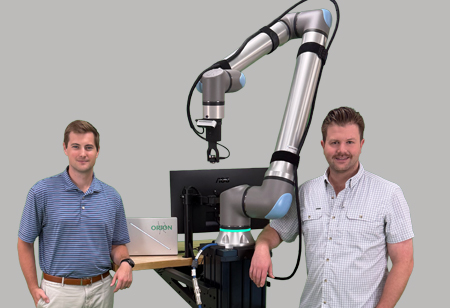
Dr. Nate Blackman, CTO, Dr. Ben Blandford, CEO
LoneStar NDE Innovations (LSNDE) is helping aerospace teams respond to a shrinking Non-Destructive Testing (NDT) workforce and inefficient robotic inspection systems. Traditional robotic inspection systems are often difficult and time-consuming to deploy and require significant safety infrastructure to keep operators out of harm’s way. In many cases, setup, programming and path planning can take weeks before scanning begins. To simplify the process, the company developed Orion, an “inspector in-mind” programming-free collaborative robot inspection system designed for operators to learn in a day, with path planning completed in minutes and it is safe for operators to work alongside.

Safeguarding Aerospace Innovations with Non-Destructive Testing

In the fast-evolving aerospace industry, safety and reliability are paramount. The integrity of every component, from the smallest bolt to the largest engine part, is critical to the performance and safety of aircraft. As a result, aerospace manufacturers and service providers rely heavily on non-destructive testing (NDT) and inspection systems. These technologies allow for the detection of hidden flaws and structural issues without causing any damage to the components being tested.

Advancing Aerospace Inspection Through Speed, Precision and Usability

Inspection integrity in aerospace and defense environments depends on more than defect detection; it determines production continuity, certification confidence and downstream liability exposure. Traditional non-destructive testing approaches continue to face pressure from workforce attrition, extended training cycles and inconsistent data capture. Skilled inspectors remain scarce, while manual methods introduce variability that complicates repeatability and slows throughput. Legacy automation has attempted to address these gaps, yet it often introduces its own constraints, including heavy infrastructure requirements, long setup times and dependence on complete design data that many maintenance or repair environments do not possess.

Maximizing Safety: How Machine Learning will Transform the Cockpit
An Airbus Innovation Center [EPA: AIR]
Maximizing Safety: How Machine Learning will Transform the Cockpit
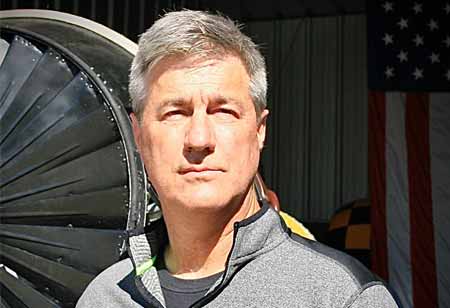
Paul Smith, Director of Flight Test and Operations

Commercial aviation, built upon years of meticulously engineered, rule-based systems, is entering a period of radical change. Implementation of AI and ML systems is advancing at an ever-increasing speed as they demonstrate advantages in capability, accuracy and efficiency, offering the sector its most significant opportunity since the jet engine: the chance to shift from minimizing errors to predicting and pre-empting them entirely. This is the safety imperative of the twenty-first century.

Aerospace NDT Moves Deeper into Production and MRO Assurance

Friday, August 07, 2026

Aerospace non-destructive testing and inspection systems are gaining stronger relevance as aircraft manufacturers, defense programs and maintenance providers face tighter safety expectations. The sector depends on inspection methods that can find internal or surface-level defects without damaging high-value parts, which makes NDT central to both production quality and in-service reliability. The market outlook reflects this role. The global non-destructive testing market in aerospace and defense was valued at USD 3.33 billion in 2025 and is projected to reach USD 5.25 billion by 2032, with a CAGR of about 6.8 percent. Maintenance, repair and overhaul accounted for the largest application share in 2025. This growth is being shaped by fleet age, aircraft utilization and tighter inspection requirements across safety-critical components. An aircraft part may appear sound externally while containing cracks, voids, corrosion or bond defects that can affect long-term performance. NDT systems help operators identify these issues before they become failures. The principal methods are still very application-oriented. For example, ultrasonic testing can be used to find flaws and thickness variations. The eddy current testing technique is applied extensively for detecting surface and subsurface flaws in conductive materials. Radiographic testing will be able to provide information about the internal structure of the product when volume testing is required. In 2025, ultrasonic testing was leading the aerospace and defense non-destructive testing market by technique with a 31.5 percent share. It is due to a broader application of the method on aircraft structures, engines, and in other areas requiring the detection of internal flaws. Aerospace manufacturers require non-destructive testing to guarantee first-time quality. Rejected components can slow down the assembly process and lead to costly repair work. Inspection technologies that allow receiving consistent results and providing integration into production records may help suppliers to have more control over the process. However, MRO service providers experience different requirements. They need efficient inspection solutions that will ensure a fast testing process without compromising safety. Portable systems, advanced probes and digital reporting can help technicians inspect aircraft more efficiently while preserving traceability. Certification and personnel qualification remain central. The FAA’s Advisory Circular 65-31B provides recommendations for experience, training, qualification, examination and certification of NDI personnel involved in inspecting aircraft, engines, propellers and other aviation components. The next phase of aerospace NDT will likely favor systems that combine proven inspection physics with better data handling. Customers need accurate detection, but they also need results that can be stored, reviewed and linked to quality decisions. Aerospace non-destructive testing and Inspection technology is increasingly being seen as part of the life cycle assurance process. The effectiveness of such technologies will depend on their ability to assist manufacturers and MRO facilities in maintaining safety without increasing uncertainty.

Automation and AI Push Aerospace Inspection toward Faster Defect Decisions

Friday, August 07, 2026

Aerospace non-destructive testing and inspection systems are being reshaped by automation and AI as manufacturers and maintenance providers look for faster inspection cycles. The goal is not to remove expert inspectors from the process. It is to help them handle larger data volumes, reduce manual variation and make defect evaluation more consistent. Aerospace inspection is becoming more data-intensive. Digital radiography, computed tomography, phased-array ultrasonics and high-resolution visual inspection can generate large datasets. These outputs can improve inspection depth, but they also create a review burden for skilled personnel. Research in aerospace NDT describes the industry as rapidly incorporating robotics, AI, machine learning and advanced analytics into inspection processes. These technologies are being used to improve accuracy, efficiency and safety in aircraft maintenance and inspection workflows.  Automation is of particular value in cases when inspections are repetitive, hard to reach or challenging. Robotized scanning machines may move along specified paths on aircraft structures. Automated ultrasonic inspection systems may control the movement of the probe to inspect complex parts. Vision systems may filter out images for potential defect existence prior to human evaluation. AI is also being applied in defect detection in the form of an interpretable computer vision system that was introduced in 2026 for X-ray computed tomography of aerospace SiC/SiC composites. This paper demonstrates the importance of transparency in the use of AI in aerospace quality decisions. This aspect is crucial. Buyers of aerospace equipment will never accept black box automation without proof of its reliability for inspection. Tools with AI technology should provide information on what is reliable and uncertain, as well as correlation with known defect types. Drone and robotic inspection are also moving forward. A 2026 paper demonstrated autonomous contact-based ultrasonic NDT using a commercial multirotor in an unstructured industrial environment. The study shows how autonomous systems may eventually support inspection in confined or hazardous areas.  For system providers, the opportunity lies in combining automation with auditability. A useful inspection system should capture data, flag anomalies and preserve a clear record of how decisions were made. This is important for manufacturers, airlines and defense customers that must defend inspection outcomes during audits. The challenge is integration. Automated systems must fit existing quality procedures, training programs and certification expectations. A technology that improves detection but disrupts documentation may struggle to scale. The next phase of aerospace inspection will likely reward providers that offer explainable AI, controlled robotics and practical workflow integration. Speed matters, but trust matters more. Aerospace non-destructive testing and inspection systems are becoming decision-support platforms. Their strongest value will come from helping inspectors work faster while maintaining the traceability and judgment that aerospace quality demands.

Advanced Materials and Additive Parts Raise the Inspection Burden

Friday, August 07, 2026

Aerospace non-destructive testing and inspection systems are facing new demands as aircraft, defense and space programs adopt advanced composites, complex alloys and additively manufactured components. These materials can improve performance, but they also require inspection methods that can detect flaws hidden inside unfamiliar geometries. The aerospace NDT industry is on the rise due to the adoption of innovative inspection technologies for aircraft manufacturing and maintenance. The market scope mentions that ultrasonic testing, radiographic testing and eddy current testing form the key techniques which have contributed towards safety and innovative inspections in the industry. Inspection of advanced materials is difficult since flaws will not appear as they do in traditional metallic parts. Delamination, porosity, impact damage or bond problems can occur in composite materials, while internal voids, lack of fusion and surface finish within channels can happen in additive manufacturing. Inspection systems must adapt to these material-specific risks. The growth forecast also points to this shift. Research and Markets says aerospace and defense NDT growth is being supported by automated and robotic NDT, real-time data analytics, portable devices for field inspection and specialized NDT needs created by additive manufacturing.  This is especially important for aerospace suppliers moving additive manufacturing from prototype to production. A 3D-printed bracket, heat exchanger or engine-related part may have internal features that cannot be checked through ordinary visual inspection. Computed tomography, advanced ultrasonics and digital radiography can become necessary to verify build quality. Composite inspection is also gaining attention. The 2026 computer vision study on aerospace SiC/SiC composites reflects the difficulty of assessing advanced ceramic matrix composites through X-ray tomography. The researchers emphasized the need for traceable defect decisions because expert visual review can lack consistent documentation.  This creates a stronger role for inspection system providers. Customers need help choosing the right technique, validating inspection procedures and defining acceptance criteria. A system sale alone may not be enough when the material, geometry and defect mode are new. Supply chain quality is another issue. Aerospace primes increasingly rely on specialized suppliers for machined, composite and additively manufactured parts. Inspection data must move across the supply chain in a usable format so that customers can verify quality without repeating every test. Portable inspection tools will remain important for field use, but laboratory-grade systems will also grow where parts require deeper analysis. The market will likely split between high-throughput production inspection and advanced defect characterization. The next phase of aerospace NDT will favor providers that understand material science as well as inspection technology. Buyers need systems that can keep pace with the changing parts entering aircraft and spacecraft programs. Aerospace non-destructive testing and inspection systems are becoming more specialized as materials evolve. Their value will be measured by whether they help aerospace companies qualify advanced parts without weakening safety, documentation or production efficiency.

Aerospace Non-Destructive Testing and Inspection Systems Info

Q1
What Do Aerospace Non-Destructive Testing and Inspection Systems Do?
Aerospace non-destructive testing and inspection systems help organizations examine aircraft, spacecraft, engines, structures and components without damaging the parts being inspected. Top Aerospace Non-Destructive Testing and Inspection Systems support defect detection, material verification, maintenance decisions and production quality control across safety-critical environments where even small flaws can affect reliability, certification confidence and long-term asset performance. They are used to protect both structural integrity and operational continuity.
Q2
What Capabilities Are Included in Aerospace NDT Systems?
Aerospace NDT systems may include ultrasonic testing, eddy current testing, radiographic inspection, visual inspection tools, thermal methods, sensor platforms, robotic scanning, data capture software and reporting workflows. Top Aerospace Non-Destructive Testing and Inspection Systems combine inspection hardware, repeatable processes and usable data so teams can assess complex materials, bonded assemblies and precision components with greater confidence across production, repair and research settings. The strongest platforms also help standardize how findings are recorded and reviewed.
Q3
Why Is Demand Growing for Aerospace Inspection Solutions?
Demand is rising as aerospace programs rely on lighter materials, tighter quality expectations, aging fleets, high-value assets and more complex maintenance requirements. Top Aerospace Non-Destructive Testing and Inspection Systems are becoming more important as manufacturers, MRO facilities and defense organizations look for inspection methods that improve throughput, strengthen traceability, reduce avoidable downtime and support safer decisions without relying only on manual evaluation. Workforce constraints and pressure for faster turnaround further increase interest in more efficient aerospace inspection solutions.
Q4
How Are Leading Aerospace Inspection Systems Evaluated?
Leading aerospace inspection systems are evaluated by accuracy, repeatability, safety, ease of deployment, operator training needs, compatibility with aerospace materials and the clarity of inspection records. Top Aerospace Non-Destructive Testing and Inspection Systems also need to fit production, MRO, defense and research environments while supporting practical implementation, consistent documentation and dependable results under demanding operational conditions. Decision-makers often consider integration needs, service support and the ability to scale across different part types.
Q5
How Do Aerospace NDT Platforms Create Operational Value?
Aerospace NDT platforms create value by helping teams find defects earlier, reduce rework, support compliance readiness and avoid unnecessary part removal or destructive testing. Top Aerospace Non-Destructive Testing and Inspection Systems can improve decision-making by connecting inspection results with maintenance planning, quality assurance, engineering review and lifecycle documentation, making inspection a stronger contributor to cost control and risk reduction. Better inspection visibility can also help teams prioritize repairs and release assets with greater confidence.
Q6
What Role Do Innovation and Expertise Play in Aerospace Inspection?
Innovation matters when inspection tasks involve composites, bonded structures, irregular surfaces, large assemblies or limited access areas. Top Aerospace Non-Destructive Testing and Inspection Systems benefit from domain expertise, practical software design, automation, sensor integration and clear visualization tools that help inspectors and engineering teams turn complex readings into reliable decisions while improving consistency across different facilities, materials and inspection methods. Technical expertise is especially important because aerospace inspection must balance speed with disciplined validation.