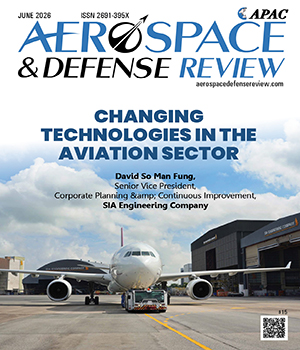
Digital Transformation within the Aviation Sector and Key Objectives You Achieve in Terms of Innovation and Technological Advancement Digital transformation is not a standalone project. It is important to align its objectives with the company’s business strategies. In SIAEC, our digital transformation initiatives aim to deliver value in operational excellence, customer intimacy and service innovation. In each of our specific plans to achieve these end goals, we measure our progress and outcomes in the areas of technology foundation, digitalization of operations, pervasiveness of digital cultures (e.g., agile, data, UX, innovation), staff experience and cyber security, just to name a few. Experiences from One of the Initiatives That You Were Recently Involved In One notable example of a recent SIAEC digital transformation initiative would be the creation of eLITE, which is a suite of applications developed in-house to support the growing line maintenance (LM) operations. Our LM staff embarked on a series of training in software development, agile, design thinking, and user experience to develop eLITE from scratch, transforming the business and IT relationship from transactional to collaborative. eLITE has helped the LM team significantly improve its operational efficiency through collaborative planning, real-time operations awareness and alerting, task prioritization and tracking, and assisting Technicians and Engineers with information and support on the go. Emerging Technologies in Aviation, Such as Supersonic Travel or Electric Vertical Take-off and Landing (VTOL) Aircraft, That Intrigue You the Most With the difficult time of the pandemic behind us, I am thrilled by the changes taking place around us. Digitalization of MRO tasks, for example, will transform the way we work, and I am eager to see how much productivity and efficiency it will bring to the MRO industry. "The best solution to a business pain point may not even be a digital on
Aerospace and Defense Consulting
Loris Molent
Practical Aircraft Structural Integrity Training and Advisory
Loris Molent AM, Director
At 40,000 feet, aircraft safety depends on physics, engineered systems, and the expertise of the specialists who certify them airworthy. That expertise is often underestimated, and few have contributed more to strengthening it than Loris Molent, Member of the Order of Australia (AM). After 36 years as a structural integrity specialist with Australia’s Defence Science and Technology Group, Molent has led full-scale fatigue testing programs, accident investigations and applied research that have shaped critical advances in aircraft life management. His contributions were recognized with the 2025 USAF Lincoln Award for dedicated service and significant impact on aircraft structural integrity. Today, that depth of experience underpins his consultancy and training practice, focused on advancing aircraft structural integrity through specialized advisory services and education. Reflecting this contribution, Molent was named among APAC’s Top Aircraft Structural Integrity Training and Advisory Providers in 2026. “The focus has always been on practical outcomes, applying innovative methods to real aircraft fatigue, failure, and structural challenges,” says Molent. A Curriculum Grounded in Real Aircraft Experience How are Molent’s training programs structured to emphasize practical aircraft structural integrity applications? Molent’s courses are structured around methods developed through fatigue testing and accident investigation. The curriculum covers aircraft structural failure analysis and prevention, structural integrity familiarization for aircraft and engines, full-scale fatigue design and testing of military aircraft, and the structural aspects of accident investigation. Across all courses, conventional, theory-heavy instruction is kept to a minimum. The emphasis is on applying proven methods to real aircraft problems. .

A&D Manufacturing
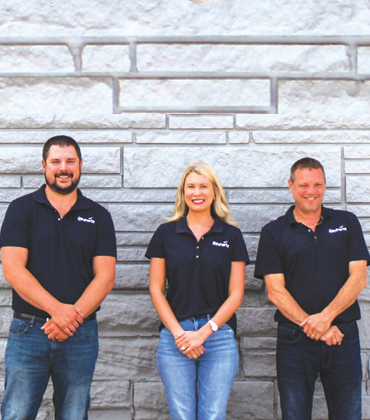
GovParts is where legacy blueprints meet modern engineering, delivering mission-critical components to the U.S. Department of Defense (DoD) with unmatched precision and compliance. From Made-to-Print metal parts to wire rope systems and complex assemblies, GovParts does more than manufacture; it rethinks how defense production can work better. While most suppliers simply fulfill orders, GovParts digs deeper. It identifies and resolves inefficiencies hidden in outdated materials, legacy specs, and bureaucratic bottlenecks while remaining compliant. Since its acquisition by a woman entrepreneur in 2023, the company has more than doubled its sales, driven by a solutions-focused culture that blends technical rigor with strategic foresight. Much of GovParts’ work involves bringing decade-sold designs, some dating back to the 1970s, to life with today’s precision manufacturing tools. As a trusted partner of the Defense Logistics Agency, the company is known for tackling the challenges others avoid. “We’re working with legacy materials and detailed packing requirements that push us to be more precise and innovative in our execution. While sometimes rooted in decades-old standards, these specifications present opportunities for us to uphold the highest quality while exploring more efficient ways to meet contract expectations,” says Adam Royer, general manager. Although current procurement processes often limit pre-award feedback and deviation approvals can take up to 75 days, GovParts sees this as an area for collaboration and improvement, an opportunity to enhance agility and better support the Department of Defense’s mission-critical needs. From Reactive to Revolutionary: Changing the Defense Game GovParts challenges these constraints head-on, rewriting the playbook to bring modern solutions into a legacy-bound system. The company is moving upstream in the defense supply chain, shifting from reactive fulfillment to proactive engineering. By engaging earlier in the DoD acquisition process, GovParts helps clients modernize outdated specifications, identify better materials, and streamline post-award chaos into pre-award clarity.
A&D Manufacturing
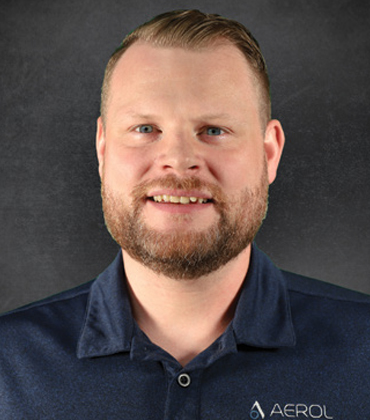
Aerol is a trusted engineering partner with over seven decades of experience in delivering reliable mobility and ground support solutions for mission-critical applications. It designs application-specific high-performance casters, running gear and ground support equipment with end-users in mind. A deep understanding of complex operational needs allows it to support various clients, including Department of Defense (DoD) engineering depots, military prime contractors and commercial aerospace and space exploration leaders like United Launch Alliance and Blue Origin. Aerol’s strength lies in its deep vertical integration, made possible by its parent organization, Caster Concepts, comprising ten U.S.-based business units specializing in unique capabilities. This tightly connected structure enables Aerol to leverage in-house expertise to reduce lead times and develop distinct, custom-built solutions that others can’t match. “Our strength lies in being able to tailor our solutions like an à la carte menu—mixing proven components to meet precise requirements with speed and precision,” says Alex Harden, technical product manager. For instance, its sister company, Conceptual Innovations, plays a key role in integrating Aerol’s solutions with advanced technologies like automated systems and automated guided vehicles. From fabrication and machining to in-house polyurethane processing, every stage of production is handled internally, ensuring complete control and accelerated turnaround. Aerol’s ability to deliver reliable, high-performance equipment is powered by a streamlined process that begins with a strong focus on engineering and quality standards. Its in-house engineering team includes experts in mechanical, electrical and hydraulic design. As a certified AS9100D supplier, it follows rigorous processes and meets demanding military specifications.
A&D Manufacturing

Moving to Agile Manufacturing of Composites
Bob Yancey, Business Development Director, Hexcel Corporation
MRO

Introducing Bombardier Defense
Steve Patrick, Vice President, Bombardier Defense [TSE: BBD.B]
eVTOL

Redefining Future Operations through Technology Enabled Services
Chris Allan, Director Accounts & Partnerships, NATS[NYSE: NAT]
eVTOL
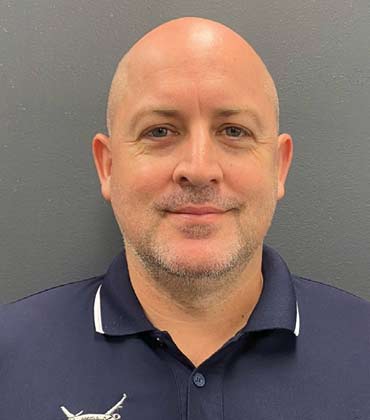
Navigating Aircraft Maintenance Quality Challenges: Insights from a Quality Manager
Ben Osborn, Head of Airworthiness Compliance, Northrop Grumman [NYSE: NOC]
Defense Solutions

Are You Ready To Embrace Emerging Digital Aviation?
Scott White, Senior Manager Strategy and Business Development, Airbus in Australia Pacific
A&D Training & Simulation

Balancing Safety, Compliance, and Strategic Growth
Digno Bernardino, Head of Risk Management, Philippines AirAsia
Aerospace Manufacturing
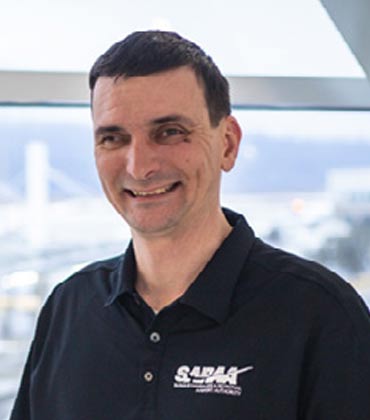
Preventive Maintenance as an Operational Strategy for Airport Operations
James R. Sides, Deputy Director of Maintenance, Harrisburg International Airport

IN MY OPINION
A&D Manufacturing
Building a High-Performance Culture to Empower Employees and Drive Business Success
Amy Clefisch, Vice President Human Resources, Aerospace & Mission Systems, BAE Systems

LAST WORD
Aircraft Engine
Building Trust, Reliability and Resilience in Modern Aircraft Maintenance
Barry Lott, Director, Aircraft Records and Maintenance Reliability, Southwest Airlines
IN FOCUS

APAC Aviation: Driving Reliability through Structural Integrity Programs
Structural integrity solutions improve aviation reliability, compliance, workforce readiness, and maintenance efficiency across APAC markets.
APAC Aviation Fuel Management: Supporting Reliable Flight Operations
APAC aviation fuel services are advancing through digital coordination, efficient supply management, sustainability initiatives, and stronger operational reliability standards.
EDITORIAL
Engineering Readiness for a New Aerospace Era
This issue features Molent Consulting and its founder, Loris Molent, recognized as the Top Aircraft Structural Integrity Training and Advisory Solutions in APAC for 2026. With more than three decades of experience spanning aircraft structural integrity, fatigue testing and accident investigation, Molent has developed an approach grounded in real operational application. His programs are designed to help aviation organizations deal with practical structural assessment challenges, fatigue management and failure analysis in demanding environments.
This edition also explores the leadership and workforce priorities shaping aerospace and defense organizations today. Amy Clefisch, Electronic Systems VP of Human Resources at BAE Systems, shares insights on building a high-performance culture through continuous feedback, leadership development and adaptability.
At the same time, Steve Patrick, Vice President at Bombardier Defense, discusses the growing demand for intelligence, surveillance and reconnaissance capabilities along with the company’s focus on special mission aircraft. His insights reflect how defense aviation is shifting toward more flexible platforms, integrated engineering and mission-specific customization to support evolving operational requirements worldwide.
Together, the leaders and organizations featured in this issue reflect a broader trend shaping aerospace and defense across APAC. Progress is increasingly driven by operational discipline, technical depth and the ability to adapt with precision in a rapidly changing environment.
We invite you to explore the perspectives, strategies and innovations featured throughout this edition as the industry continues navigating the next phase of aerospace and defense advancement across the region.
