THANK YOU FOR SUBSCRIBING

Aerospace and Defense Review Weekly Brief
Be first to read the latest tech news, Industry Leader's Insights, and CIO interviews of medium and large enterprises exclusively from Aerospace and Defense Review
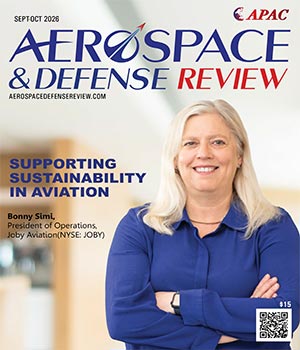
What is your opinion on the impact of sustainable technology on the aviation space? Sustainable technologies are key to the continued growth of aviation. With the impact of climate change on our environment becoming increasingly apparent each year, it is critical that governments strongly support the development and commercialization of truly sustainable solutions for flight with a focus on alternatives such as electric and hydrogen propulsion that eliminate carbon emissions. Governments need to think holistically about the green energy infrastructure required to support these emerging technologies. Investments in electric power grids, hydrogen production, and distribution are some of the areas needing immediate attention. What are some of the innovations in the field of aviation that can help businesses enhance their services and increase customer satisfaction? There are many opportunities to improve the overall customer experience both on and off the airplane, from increased use of digital tools and automation to enhancements in the airport experience. For example, our partner Delta Air Lines is reimagining the lounge experience at its hub airports in Los Angeles and New York and were working with them to provide a home-to-seat service that will turn what is often the hardest part about air travel “ getting to your flight “ into a seamless and enjoyable part of the journey. Imagine opening an app on your phone and instantly booking a ride to the airport. A car will pick you up and whisk you a short distance to a Joby vertiport where you will fly above the traffic directly to the airport - and only a short walk to your airline seat.
A&D Training & Simulation
Parylene has become one of the most popular coating materials, owing to its high reliability and performance. But achieving excellence in parylene coating requires more than routine application. The solution is a combination of proven experience and cutting-edge technology.
DAWN Tech has set a benchmark in the industry with its unrivaled technical know-how, proprietary equipment and a deep commitment to quality. This powerful combination significantly improves the standards of the parylene coating, resulting in a superior solution for clients across industries.
“We prioritize quality and exceptional service for our customers, leveraging our specialized knowledge, precise focus and experience,” says Koon Lee Shen, chief technology officer.
It constantly upgrades its techniques through research and development, elevating parylene from a top-tier product to best-in-class.
Parylene belongs to a specific family of polymers created via vapor deposition. It forms an ultra-thin, uniform layer that adheres precisely to the contours of substrates, leaving no gaps for contaminants to penetrate. Known for its longevity, it has become a sustainable alternative for companies committed to environmental responsibility. DAWN Tech’s advanced application process maximizes these attributes, making parylene an ideal solution for high-value sectors such as electronics, automotive, aerospace, defense and medical industries.
Over the years, the technology has been highly successful across the APAC region and DAWN Tech is increasingly expanding its presence to global markets, including in the U.S.
Cutting-Edge Protective Innovation
With four decades of experience in surface treatment and parylene coating, Shen’s laser focus on the industry has been instrumental in expanding applications.
Initially, parylene was primarily sought for components such as high-end printed circuit board assemblies. Over time, it extended to more common applications, including those requiring waterproof and water-resistant properties.
 Its gaseous deposition offers a key advantage—eliminating pinholes and defects even when the coating is as thin as one micron. When processed in DAWN Tech’s specialized vacuum chamber, parylene clings to surfaces of any size or form, effectively covering crevices, edges, points, sharp ends and internal surfaces without gaps. The uniformity of the coat makes it different from liquid-based coatings like silicone or acrylic, which fail to take the exact contour of the substrate.
Aviation Operations Solutions in APAC

CAE has built a 75-year legacy of industry firsts, setting the gold standard in simulation-based training and empowering professionals in aviation, defense and security. As one of the early pioneers in fullflight simulator manufacturing, CAE continues to lead the way in providing innovative training solutions. CAE ensures unmatched safety, operational efficiency and mission readiness by harnessing the power of artificial intelligence, virtual reality and datadriven analytics. With operations in over 40 countries and a team exceeding 13,000 employees, CAE is shaping the future of training through its forward-thinking approach. Founded as a small company focused on meeting the growing demands of the aviation industry, CAE quickly set its sights on developing technology to improve pilot training. In the 1950s, the company made a breakthrough by creating the first full-motion flight simulator for the Canadian government. This innovation transformed aviation training, allowing pilots to train in realistic, risk-free environments and significantly enhancing safety and efficiency. Over the years, CAE has expanded its solutions, becoming a leader in civilian and military training and continuing to pioneer new advancements in simulation technology. Simulating Success in Aviation Training CAE plays a pivotal role in developing and delivering comprehensive training programs that meet the growing and changing needs of the aviation industry. From preparing new pilots to enhancing the skills of experienced professionals, CAE’s solutions encompass all levels of aviation expertise. Offering everything from ab initio (beginner) training to type-rating and recurrent training for seasoned pilots, CAE ensures comprehensive professional development across the aviation sector. It operates one of the world’s most extensive networks of flight training centers, where pilots receive hands-on training in state-of-the-art full-flight simulators. The CAE 7000XR Series is among the most advanced simulators available, offering high-fidelity replications of aircraft such as the Airbus A320, Boeing 737 and Bombardier Global 7500. These simulators allow pilots to train under realistic conditions, experiencing various weather patterns, airport environments and emergency procedures in a safe, controlled setting. The training prepares pilots for realworld challenges, including engine failures, adverse weather landings and high-stress in-flight emergencies. CAE also offers extensive programs for cabin crew and aircraft maintenance technicians. Its cabin crew training programs incorporate hands-on practice in full-scale cabin simulators, where trainees undergo rigorous training in emergency procedures, including rapid decompression, water landings and passenger evacuation. The emphasis is on safety and customer service excellence, ensuring flight attendants can effectively handle all aspects of in-flight operations. It equips aviation technicians with the skills to service, inspect and troubleshoot various aircraft, including commercial, business and rotary-wing models. Training covers multiple aircraft types, including next-generation jets such as the Boeing 787 and Airbus A350, ensuring technicians are prepared to work on the latest aviation technologies. These programs use a blend of classroom instruction, virtual simulations and real-world aircraft components to develop hands-on technical skills.
Supporting Sustainability in Aviation
Strong strategies set direction, but success comes from leaders who know themselves, understand their people and excel in execution. At Academy Leadership, this philosophy has been the guiding compass. It combines military-tested principles with practical business strategies to help leaders apply the right approach across their organizations. Academy Leadership was founded in 2000 by Dennis Haley, a U.S. Naval Academy graduate who led one of Delaware Valley’s largest HVAC companies. Drawing on leadership lessons from his midshipman years and the Navy’s Command Excellence Program, he developed programs that combined personal reflection, values-based leadership and practical business strategies. Today, the company equips organizations with tools for self-awareness, communication and trust building. Refined over 25 years, its programs remain anchored in the same principles that have developed successful and capable military leaders. “Our work enables clients to move beyond surface fixes. We identify the root causes and provide the appropriate tools that facilitate change and deliver tangible results,” says Sean Haley, director of leadership programs. Its programs range from single-day sessions to extended engagements, along with tailored initiatives for specific organizational needs. The team comprises veterans and former military officers who blend service experience with business expertise to effectively tackle systemic challenges. For clients facing growth, turnover or succession planning, they analyze and design programs centered on goal setting, vision alignment and communication, creating a strong foundation for advanced leadership development and ultimate success. Academy Leadership caters to Fortune 500 clients like Northrop Grumman and Moody’s, military clients like the US Air Force Third Wing and the administrative teams of UC San Diego and municipalities in Hillsborough and Fulton Counties. It also excels at delivering results for small and medium-sized enterprises that understand their business model but struggle with growth, vision alignment and developing leadership capacity beyond the C-suite. Its leadership programs rest on three pillars—knowing yourself, your people and your stuff. Most leaders understand their operations but lack clarity about who they are as leaders and how to best communicate with their respective teams. The personal leadership philosophy module, adapted from the Navy’s Command Excellence Program, helps participants define who they are as leaders, what they expect and what their teams can expect from them in return.

Ammunition

The Fast Moving Space Industry is Embracing New Methods
Elizabeth Seward, Head of Strategy – Space, BAE Systems(LON: BA)
Aerospace and Defense Consulting

Changing Technologies in the Aviation Sector
David So Man Fung, Senior Vice President Base Maintenance, SIA Engineering Company [SGX: S59]
eVTOL

Navigating Aircraft Maintenance Quality Challenges: Insights from a Quality Manager
Ben Osborn, Head of Airworthiness Compliance, Northrop Grumman (NYSE: NOC)
Defense Intelligence

Navigating Quertaros Aerospace and Defense Frontier: Innovations in Aviation, Defense, and Program Management
Sergio Aceves Gallegos, Engineering Program Manager, BOMBARDIER
A&D Manufacturing

Redefining HR Roles with Technology and Strategic Impact
Joseph Kennedy, Director of Human Resources, ATI Forged Products
IN MY OPINION
Aviation
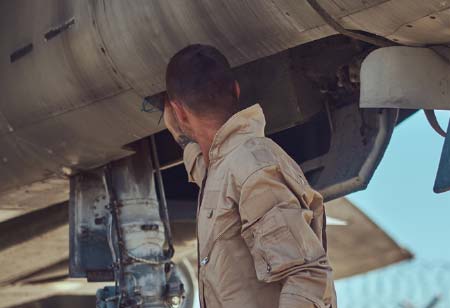
Safeguarding Aviation: Mitigating Human Error in Aircraft Maintenance, Repair, and Operations
Joanna Kolokythas, Line Maintenance Manager at National Jet Express

LAST WORD
A&D Manufacturing
What it Takes to Lead a Team at the World's Busiest Airport
Perry Venturo, SVP of Operations for Atlanta & the Southeast, Unif [NYSE: UFI]
IN FOCUS

Future Prospects of APAC Satellite and Spacecraft Subsystem
APAC's satellite and spacecraft subsystem industry is set for significant growth, driven by advanced technology, strategic investments and global partnerships, enhancing its role in space exploration.

Navigating Flight Planning in Business Aviation: Challenges in the APAC Region
Effective flight planning in APAC aviation demands flexibility, technology, and clear communication for safety and efficiency.
EDITORIAL
A Glimpse into APAC’s Aerospace and Defense Renaissance
The Aerospace and Defense (A&D) sector in the Asia Pacific region is undergoing a profound transformation. As geopolitical tensions heighten and national security imperatives intensify, the sector is gaining renewed strategic importance. At the same time, with commercial aviation rebounding after the complete alleviation of pandemicrelated restrictions, governments and private players are directing unprecedented levels of investment toward advanced technologies and infrastructure.
From hypersonic missile systems to AI-powered surveillance platforms and next-gen fighter jets, the APAC region is no longer just a consumer; it is fast becoming an innovation hub in its own right.
However, this transformation is not without its headwinds. The sector faces a complex array of challenges, including fragile global supply chains, skilled labor shortages, regulatory disparities across markets, and an overreliance on imported technologies. Many countries are also grappling with the delicate balance between expanding indigenous capabilities and maintaining strategic alliances, particularly as defense industrialization becomes a matter of national pride and strategic autonomy.
Yet, the region’s A&D players are not standing still. Countries like India, South Korea, Japan, and Australia are accelerating domestic production through defense offsets, joint ventures, and public-private partnerships. Simultaneously, startups and established firms alike are pushing boundaries in space technology, unmanned systems, cybersecurity, and simulation-based training. Increasingly, regional governments are streamlining procurement processes, strengthening R&D ecosystems, and committing to long-term funding models that support both innovation and sustainability.
As APAC stakes its claim in the global A&D arena, it is clear that adaptability, collaboration, and technology leadership will define its path forward. The sector is poised not just to respond to threats, but to shape a future where security and technological dominance are built hand in hand.
In this issue, we feature key players, transformative policies, and cutting-edge platforms that are reshaping the A&D sector in one of the world’s most dynamic regions. We also feature invaluable insights from industry leaders who have shaped the sector’s evolution. We believe these perspectives will empower you to make more informed, data-driven business decisions.
